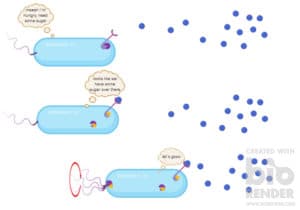
Chemotaxis helps bacteria move towards goodies
Chemotaxis helps bacteria to know that they are surrounded by certain chemicals. They can then move towards them if the chemicals are helpful. But how does chemotaxis work? Find out here.
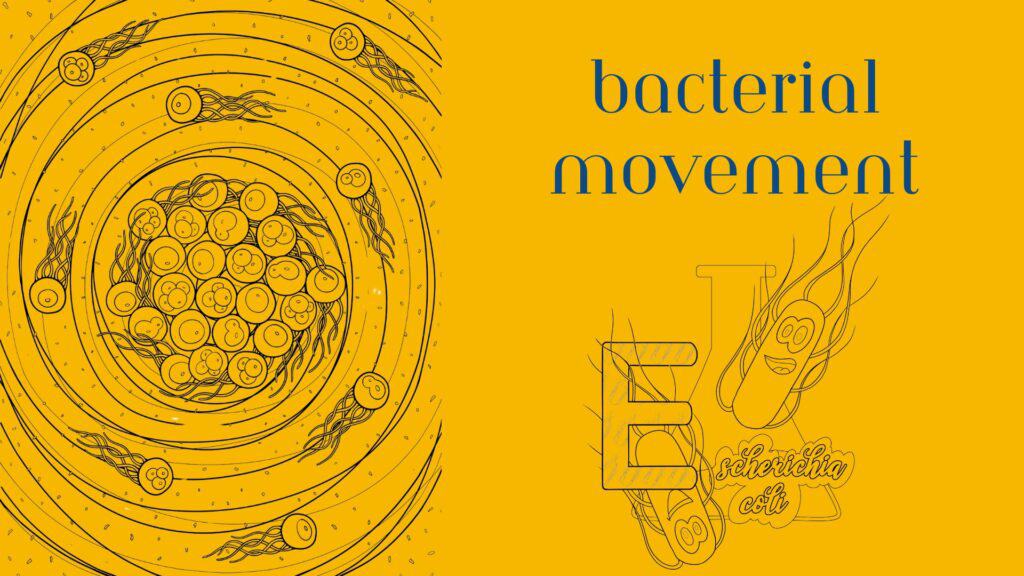
Bacteria do not just float around; many of them move with a clear sense of direction.
Some bacteria swim through liquids with flagella, tiny rotating structures that work a bit like propellers. With these, bacteria can travel through their environment instead of staying still.
Other bacteria move across surfaces. Their surface pili can extend, attach and retract, pulling bacterial cells forward. This twitching or gliding movement helps bacteria explore surfaces, interact with hosts, form biofilms and find suitable places to settle. A bacterium may be tiny, but it can still be an active explorer.
Hence, bacterial movement is important for bacteria to survive. It is part of how bacteria find food, escape danger, reach hosts, meet other microbes and build communities. Thanks to this movement, bacteria can also attach to host cells and infect them.
So, when you imagine bacteria, do not picture them as still dots. Picture them swimming, pulling, spreading, attaching and making their way through the world.
Chemotaxis helps bacteria to know that they are surrounded by certain chemicals. They can then move towards them if the chemicals are helpful. But how does chemotaxis work? Find out here.