
Rhizobium in the BacterialWorld

Plants need nitrogen to grow but they cannot use atmospheric nitrogen directly. This is where some bacteria become important underground partners.

Rhizobium bacteria are famous for their relationship with legume plants. They can help plants access nitrogen, making them a strong example of bacteria supporting plant life.

Rhizobium was one of the first described groups of nitrogen-fixing bacteria. Symbiotic Rhizobium species associate with legumes and interact closely with plant roots. Through this partnership, bacteria help turn atmospheric nitrogen into a form that plants can use.

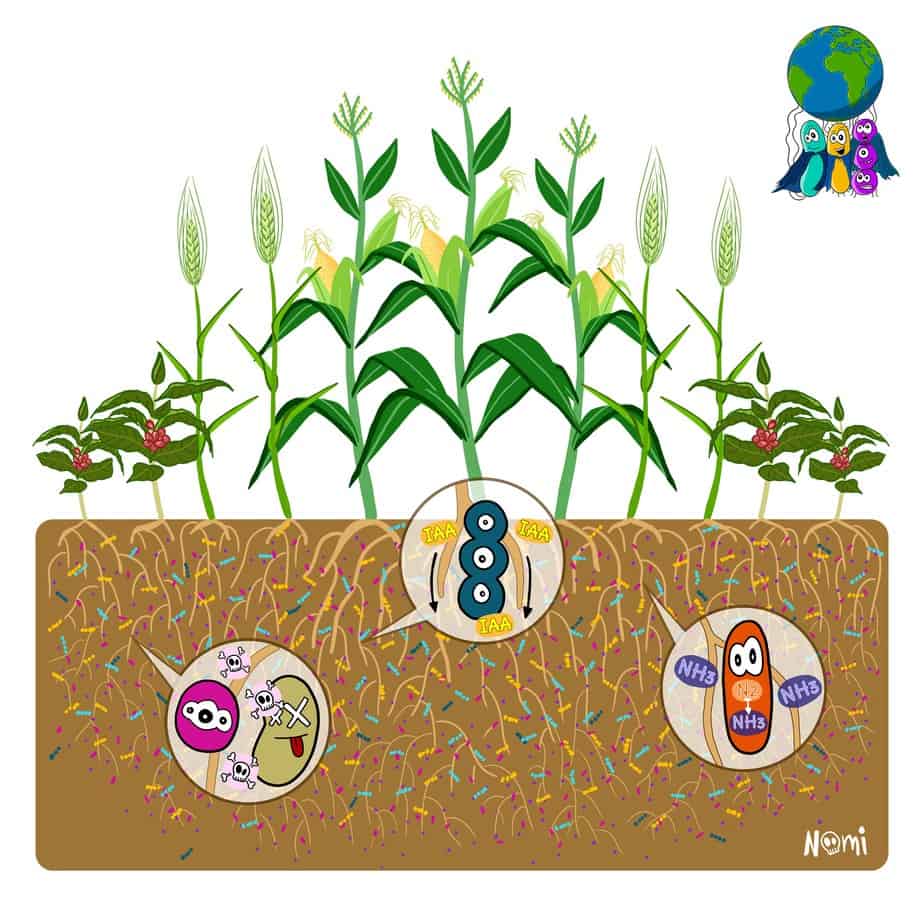
While some nitrogen fixers are free-living, including bacteria such as Azotobacter, Azospirillum, Bacillus and Clostridium, others are symbiotic, including Rhizobium and Frankia. These microbes do not just live near plants by chance. They can interact closely with plant tissues and roots, and some even actively kill other bacteria with their type VI secretion systems.

Learn about more bacteria

How bacteria help feed the world by fixing nitrogen

Like all organisms, plants need nitrogen to grow and produce crops. But since they cannot directly use nitrogen from the atmosphere, they rely on bacteria to fix the nitrogen for them. In exchange, plants provide them with sugars, energy and protection from their surroundings. Read on to learn more about the nitrogen-fixing superpower of bacteria and why it is crucial for our global food production.
Microbes as biofertilizers

Microbes produce nutrients and help promote plant growth to produce more bountiful crops and sustainable agriculture.