
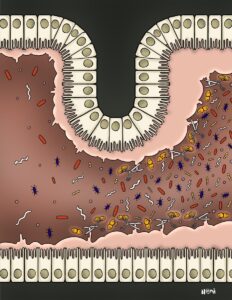
Enterococcus in the BacterialWorld

Enterococcus is a Gram-positive bacterial genus that resists simple labels. It is not just “good” or “bad”. Instead, its role depends on the species, strain and microbial neighbourhood.

Some Enterococcus bacteria can live quietly in the human gastrointestinal tract. Here, they may be part of a larger microbial community. But when certain strains reach other body sites or when clinical conditions give them an advantage, they can become difficult opportunistic pathogens.

One important species is Enterococcus faecalis. This bacterium can live harmlessly in the gut of many people, or spread to other parts of the body and cause life-threatening infections such as bacteraemia and endocarditis. In hospital settings, some Enterococcus faecalis infections are especially challenging because it can form biofilms and often acquire antibiotic resistance genes. Another challenge is that Enterococcus faecalis can produce membrane vesicles: small packages released by the bacterial cell. These vesicles can contain chromosomal DNA and may contribute to communication, antimicrobial resistance or interactions with the host immune system.

Another important species is Enterococcus faecium, also a major opportunistic pathogen. Vancomycin-resistant Enterococcus faecium, or VRE, is a leading cause of hospital-acquired infections. It can densely colonise the gut, especially after antibiotics disrupt the existing gut microbiome. Yet, intestinal commensal bacteria can inhibit dense VRE colonisation. For this, commensal gut bacteria rely on different warfare mechanisms, for example antimicrobial bacteriocins.

So the Enterococcus genus is best understood through context. In one neighbourhood, a cell may be a quiet gut resident. In another, it may become a hard-to-treat pathogen. And through biofilms, resistance genes, bacteriocins and tiny membrane packages, it can help reshape the microbial world around it.

Learn about more bacteria

How bacteria in your gut microbiome defend pathogens

Bacteria in your gut microbiome help you digest your food, strengthen your immune system and keep you healthy. For this, your gut bacteria keep you free from gut pathogenic bacteria by fighting them with different weapons. Here, we explore some ways gut bacteria defend pathogens and how you can help them protect you.

Bacteria use the type 6 secretion system (T6SS) to kill other bacteria with a crossbow and arrow.

A bacterial nanoweapon called the type 6 secretion system

Bacterial killing is happening everywhere where bacteria fight for space and nutrients. Some bacteria have highly efficient weapons to kill other microbes. These killer bacteria can survive in the rarest and driest environmental niches. Just by killing other bacteria.
What kind of fantastic nanoweapon is that?