Salmonella in the BacterialWorld

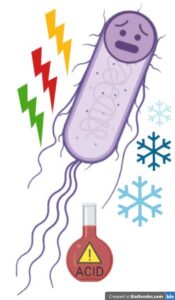
Salmonella is well known as a foodborne pathogen. You may know it from contaminated food or illness after eating something that was not handled properly. But the genus is scientifically interesting for a deeper reason: Salmonella is good at surviving, adapting, moving and competing.

Salmonella enterica serovar Typhimurium is an enteric pathogen that can cause intestinal infections after eating contaminated food or water. Salmonella enterica serovar Typhi produces typhoid toxin, an unusual AB-type toxin encoded on a genomic island.

To make its way inside our bodies, Salmonella uses its flagella. With them, it reaches suitable places, interacts with the environment and responds to changing conditions, for example between the stomach and the gut.

Once the pathogen reaches the gut, it arrives in a crowded microbial ecosystem full of resident bacteria. This makes it difficult for Salmonella to infect, since the gut microbiome can resist its colonisation. For example, a probiotic strain of Escherichia coli can slow the growth of a pathogenic Salmonella strain by using iron-binding transporters to take up iron from the environment. Since all bacteria need iron for growth, reduced available iron makes it harder for Salmonella to grow and colonise the gut.

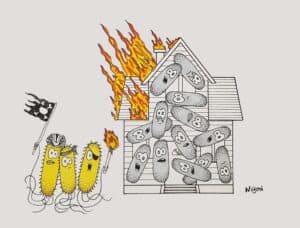
But Salmonella and gut bacteria also battle more directly. Salmonella enterica Typhimurium can interfere with biofilm formation by other pathogens. For this, it produces a toxic sugar that prevents them from forming a biofilm.

Learn about more bacteria