

Blautia are friendly bacteria that live in our gut and the guts of some animals. They’re an important part of the mix of commensal gut microbiota that helps keep our digestive system healthy.

Blautia bacteria like to live where there’s no oxygen, such as in the intestines. They’re good at breaking down certain plant-based foods that are hard for us to digest. They help in several ways: they keep a good balance of bacteria in our gut, produce short-chain fatty acids, which are good for the health of our gut and overall body, and they can even improve the immune system.

Learn about more bacteria

Blautia in the BacterialWorld

Short-chain fatty acids: what gut bacteria make from fibre

Everything we eat comes into contact with the bacteria living in our gastrointestinal tract. Our commensal gut bacteria transform the incoming food into different molecules, with short-chain fatty acids being the most important ones. These small molecules interact with your gut as well as the rest of your body. Certain factors, like diet influence which molecules and how much of them gut microbes produce.
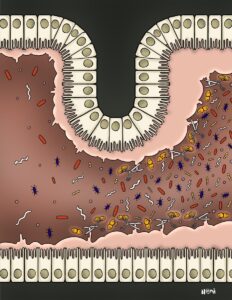
How bacteria in your gut microbiome defend pathogens

Bacteria in your gut microbiome help you digest your food, strengthen your immune system and keep you healthy. For this, your gut bacteria keep you free from gut pathogenic bacteria by fighting them with different weapons. Here, we explore some ways gut bacteria defend pathogens and how you can help them protect you.