
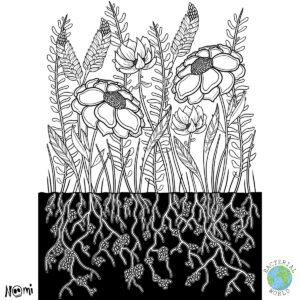
Anabaena in the BacterialWorld

These cyanobacteria show that bacteria can work as a team.

Anabaena are photosynthetic bacteria, like tiny solar panels. They use pigments to catch light and turn carbon dioxide and water into sugar and oxygen.

But Anabaena have another remarkable job: some of their cells can fix nitrogen. This means they help transform nitrogen into a form that living organisms can use.

There is just one problem. The chemistry of photosynthesis and nitrogen fixation does not play well together. Photosynthesis produces oxygen, but oxygen can harm the enzymes needed for nitrogen fixation.

So Anabaena solve this problem with teamwork: Instead every cell doing everything, some cells specialise. In a filament of Anabaena, most cells can focus on photosynthesis. Other cells become heterocysts: thicker-walled specialists that create a safe space for nitrogen fixation.

This turns Anabaena into a tiny bacterial chain, with some cells making sugars from light. Others help bring nitrogen into a usable form. Together, the whole filament can do what one bacterial cell could not manage alone.

This is one reason Anabaena are such a beautiful example of bacterial cooperation. They remind us that bacteria are not always simple, lonely cells drifting through life. Some organise, specialise and work together in structures that look almost like miniature multicellular organisms.

Learn about more bacteria

How bacteria help feed the world by fixing nitrogen

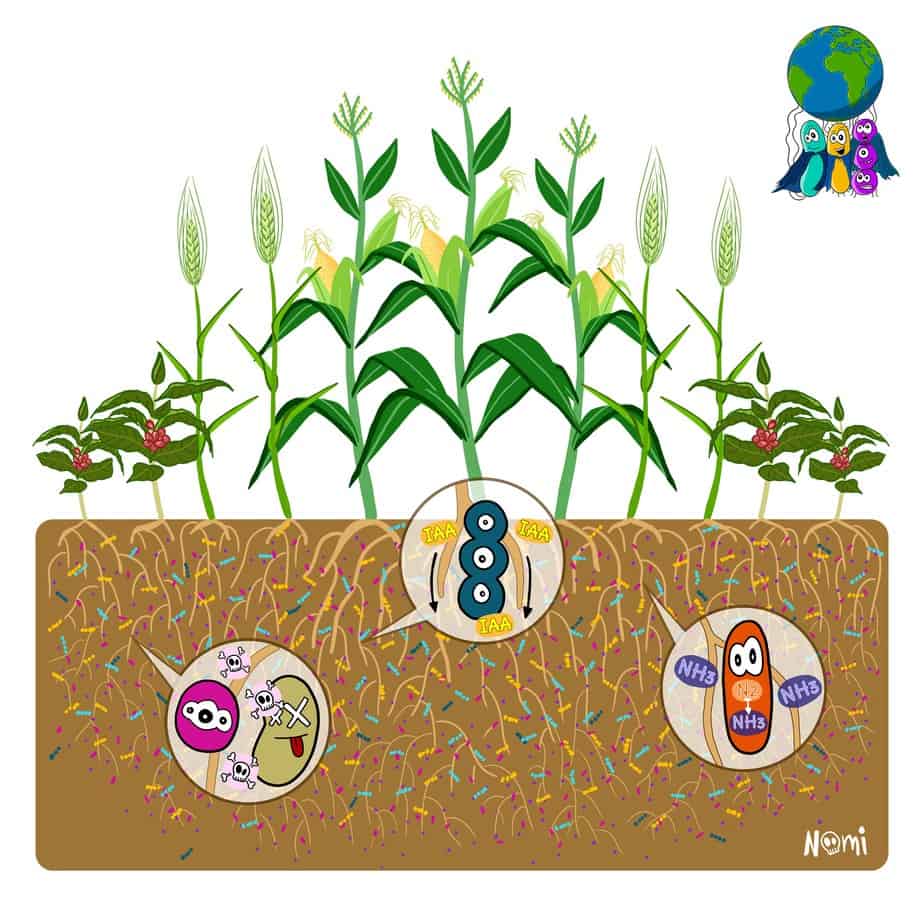
Like all organisms, plants need nitrogen to grow and produce crops. But since they cannot directly use nitrogen from the atmosphere, they rely on bacteria to fix the nitrogen for them. In exchange, plants provide them with sugars, energy and protection from their surroundings. Read on to learn more about the nitrogen-fixing superpower of bacteria and why it is crucial for our global food production.
Microbes as biofertilizers

Microbes produce nutrients and help promote plant growth to produce more bountiful crops and sustainable agriculture.

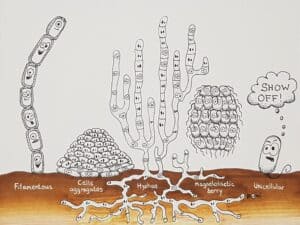
Bacteria can form multicellular organisms. They can form bacterial filaments, multicellular aggregates, hyphae networks or magnetotactic multicellular prokaryotes.

Together we are strong – bacteria form multicellular organisms

When thinking of bacteria, you might have the picture of a single cell in your mind. But interestingly, some bacteria come as multicellular organisms with advanced functions. Here, we will learn what multicellular bacteria are and why bacteria form multicellular organisms. We will then look at some colourful examples of multicellular bacteria.

20 (giant) microbes everyone should have heard about

20 interesting microbes everyone should have heard about

The microbial world is super colorful and diverse.

Even though, we sometimes hear too many negative news articles about certain players of the microbial world, we should not forget about all the other interesting and helpful microbes.

To remind you that the microbial world consists of so many more players, we assembled this list of common and interesting microbes.

Bacteria have many superpowers

The incredible superpowers of bacteria: unveiling nature’s tiny heroes

Microbes and bacteria touch every aspect of our lives. They have so many superpowers that impact the environment, food production, bioremediation and even the climate. Here, we will look at 20 of the most fascinating bacterial superpowers and tell you where you might encounter them throughout your day. But don’t forget, there are plenty more.