Chromobacterium in the BacterialWorld

Chromobacterium does not just look purple — it weaponises purple.

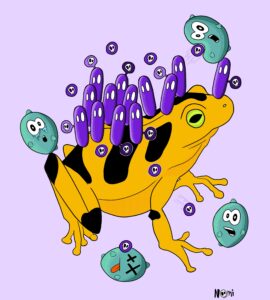
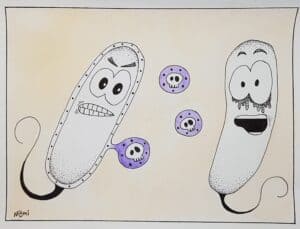
Chromobacterium violaceum produces violacein, a purple pigment that gives its colonies a smooth violet colour. Although it is fascinating, violacein is an antibiotic, and Chromobacterium uses it violently. It packages the molecule into tiny bubbles and sends them towards other microbes. When these toxic bubbles reach other bacteria, especially Gram-positive bacteria, the violacein kills them.

So, a colourful bacterial pigment can be part of a visual story of bacterial warfare. They are not always just pretty. For Chromobacterium, purple can become a killing strategy.

Learn about more bacteria

Creating the colours of the rainbow: Bacteria and the vibrant world of pigments

Our world as well as the bacterial world are full of vibrant colours. These colours exist thanks to biopigments; molecules able to capture light and reflect the corresponding colour. Many organisms, as well as bacteria, learned to use biopigments to harvest energy from sunlight, fight foes and adapt to new and challenging environments. Read on to learn what makes the bacterial world so colourful and why biopigments are the Earth’s life savers.
Bacteria produce colourful antibiotics to protect frogs

A deadly fungus kills many exotic amphibians. Luckily, some bacteria antibiotics to kill the fungal intruder and thus protect the animal. With this colourful strategy, the right microbial community might even save whole species from extinction.

Chromombacterium transports violacein within outer membrane vesicles to kill other bacteria

Bacteria firing toxic bubbles

Bacteria can form outer membrane vesicles and fill them with antibiotics. They then send these toxic bubbles off to kill competing bacteria.