

Akkermansia in the BacterialWorld

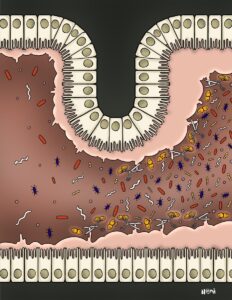
Your gut has a slimy shield — and Akkermansia lives right inside it. This slimy mucus layer sits between your gut cells and the busy microbial world inside your intestine. One bacterium closely connected to this mucus layer is Akkermansia muciniphila.

Akkermansia lives at a busy meeting point. It sits near the gut wall, the mucus and the barrier between your body and your gut microbes. It can break down mucins — the proteins that help give mucus its gel-like structure. This gives Akkermansia a special role in the gut ecosystem, where mucus can also become microbial food.

Researchers often study Akkermansia because it has been associated with gut barrier function, mucus, metabolic health and inflammation. Some studies also find higher levels of Akkermansia in athletes, with possible links to gut barrier protection, energy metabolism and immunity. These links are still context-dependent. So, Akkermansia is one bacterium living inside the gut’s slimy protective blanket, right where our cells and the bacterial world meet.

Learn about more bacteria

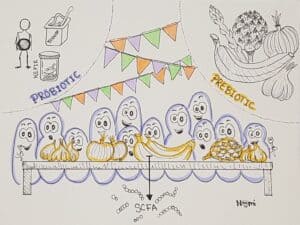
Short-chain fatty acids: what gut bacteria make from fibre

Everything we eat comes into contact with the bacteria living in our gastrointestinal tract. Our commensal gut bacteria transform the incoming food into different molecules, with short-chain fatty acids being the most important ones. These small molecules interact with your gut as well as the rest of your body. Certain factors, like diet influence which molecules and how much of them gut microbes produce.
How bacteria in your gut microbiome defend pathogens

Bacteria in your gut microbiome help you digest your food, strengthen your immune system and keep you healthy. For this, your gut bacteria keep you free from gut pathogenic bacteria by fighting them with different weapons. Here, we explore some ways gut bacteria defend pathogens and how you can help them protect you.