
Campylobacter in the BacterialWorld

Campylobacter belongs to the epsilon-proteobacteria, also called Campylobacterota, a group known for rapid motility and complex flagellar systems. Its best-known member, Campylobacter jejuni, is a leading cause of gastroenteritis and has a corkscrew-like shape. This can help it drill through gel-like or viscous fluids such as mucus in the stomach and gut.

Campylobacter powers its movement with flagella. Unlike many familiar enteric bacteria that carry many flagella around the cell body, epsilon-proteobacteria often have one or a few polar flagella, which are linked to unusually complex motors. But the length of the filament also matters for Campylobacter movement.

For a genus built around motility, that makes sense. Campylobacter depends heavily on moving through mucus-like environments, so the shape of the body, the position of the flagella and the architecture of the motor all become part of a survival strategy.

Learn about more bacteria

Comic of the different shapes of bacteria

Looking fabulous: Why bacteria need to stay in shape too

For a long time, bacteria were classified according to their shapes. With new technologies, we learned that the bacterial shapes help them survive in their environments and face harsh conditions. Spheres, rods, stars and screws: Learn about the different bacterial shapes.
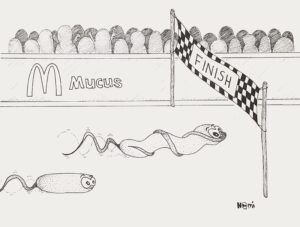
Bacteria wrap themselves in their swimming flagella

Bacteria swim through liquids with their flagella. Some bacteria even have two flagella at opposite ends that help them to swim through mucus and slime. This movement helps bacteria to infect the human body. Now, researchers start to better understand how these flagella work together to move the bacterium forward.